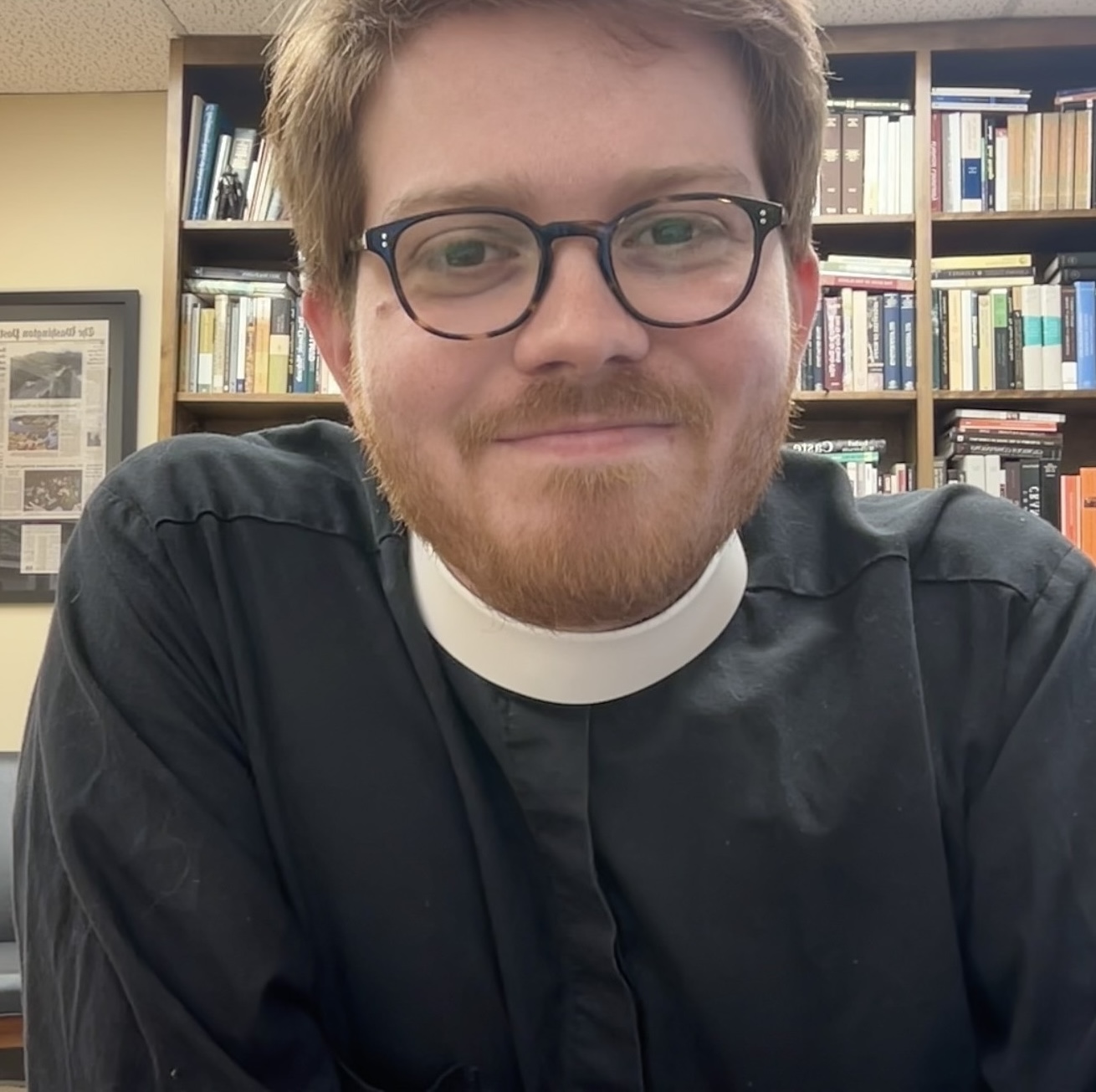
Preached on Friday, May 15, 2026 at Presbyterian Village, Little Rock in memoriam Mary Hyne Keech Fine (March 12, 1925 – April 25, 2026).
Jesus said, “I know my own, and my own know me.” (John 10:14)
Do you all remember the book Tuesdays with Morrie? It was published in 1997 and quickly became a worldwide bestseller. It told the true story of the author, Mitch Albom, reconnecting with his beloved college professor, Morrie Schwartz, some sixteen years after graduation. The reason for their reunion was tragic: Morrie had been diagnosed with ALS, a disease that slowly and relentlessly destroys the body. Knowing he was dying, Morrie invited Mitch to come visit him each Tuesday, and what unfolded over the months that followed became a kind of final seminar on life itself. Together they spoke about marriage and friendship and aging and forgiveness and fear and death. As Morrie’s body weakened, and as more and more of the ordinary abilities of life were stripped away from him, something else seemed only to sharpen and deepen: his attentiveness to life, his desire to know and to understand, and his capacity to love other people. One of the striking things about that book is that Morrie never comes across as though he is retreating from life. If anything, he seems to become more alive, more perceptive, and more capable of seeing what actually matters.
Well, in the final years of her life, we at Trinity Cathedral had, in our own way, “Sundays with Mary.” Week after week, members of the Cathedral went to visit her here at Presbyterian Village, bringing her the Bread and Wine of Holy Communion––and then lingering afterward to hear her stories. Those visits were never merely perfunctory pastoral calls. They became moments of genuine friendship and delight. We went to bring Mary the Bread and Wine, but we also went because we loved her company and because we knew we would leave having learned something new. Mary remained vibrantly herself. Even at 101 years old, she retained an astonishing sharpness of mind and an unmistakable curiosity about the world around her. She possessed that rare ability to make another person feel welcomed into her world of memories and observations and humor and wisdom.
And what a world she had known. Mary lived through more than a century of human history. She witnessed the Great Depression, World War II, the moon landing, the civil rights movement, and the technological revolution that transformed modern life almost beyond recognition. Entire eras unfolded within the span of her life. Yet one of the remarkable things about Mary was that she did not merely accumulate years; she accumulated understanding. She paid attention to life. She remembered things. She knew people. And because she was a teacher herself––remember the hymn we just sang, “you can meet them in school!”[1]––she knew how to tell a good story. In fact, she was telling me stories just hours before she died.
There is a passage in Tuesdays with Morrie where the old teacher says, “the truth is…once you learn how to die, you learn how to live” [2]. We Christians give that quote a thumbs up. The Christian faith teaches us that life is not merely about acquiring possessions or accomplishments or experiences. Human life is about coming to know rightly. It is about growing into communion with God and with one another. It is about learning, slowly and sometimes painfully, what is true and enduring and eternal.
I’m thinking of another great teacher, like Mary and Morrie, but from the thirteenth century, Thomas Aquinas, who once said that, “the desire to know is naturally implanted in all [humankind]” [3]. That is, Mary did what we were all born to do: to know things. And to push the point a bit further, the fulfillment of human life, says Aquinas, consists ultimately in knowing God Himself [4]. Humanity’s final blessedness consists in seeing and knowing God more fully and perfectly than is possible in this present life. Christians believe that Heaven is not less than life as we know it now, but more. Eternal life is the completion and perfection of everything toward which we have always been reaching. Every fragment of truth, every glimpse of beauty, every act of love, every partial understanding that we experience now finds its fulfillment in God Himself.
Or instead, here’s how Jesus puts it: “I know my own, and my own know me.” To belong to Christ is to be known by Him fully and perfectly, and it is also to come, at last, to know Him as He truly is. In this life, all of our knowing remains partial. We understand only in fragments. We catch glimpses of truth and beauty, but never the whole of it. We know one another imperfectly, and we even know ourselves imperfectly. Yet Christians believe that, in the resurrection, all that partialness will give way to fullness. As Paul says, “Now I know only in part; then I shall know fully, even as I have been fully known” (1 Corinthians 13:12).
And so for Mary, that lifelong curiosity, that delight in learning, that attentiveness to people and stories and the world around her, has not now come to an end. Instead, she has been brought into a deeper knowledge of the God Whom she worshiped and served throughout her life. The One Who formed her in the womb, the One Who walked beside her through every season of her long life, and the One Who fed her week after week with His own Body and Blood has now drawn her closer still into His presence. Mary now knows God more fully and more perfectly than she ever has. And at the last day, when Christ raises the dead and renews all things, she and all of us together will know Him in the fullness of His One and Eternal Glory.
Today we grieve because we loved Mary. Yet we do not grieve as those without hope. We commend Mary into the hands of the risen Christ, trusting that the God Who has begun a good work in her will bring it to completion. The same Lord Who conquered death by His resurrection now holds Mary in that life where knowledge is no longer clouded, where truth is no longer partial, and where joy is made complete in the presence of God forever. Amen.
[1] Lesbia Scott, “I Sing a Song of the Saints of God,” Hymn 293, The Hymnal 1982 (New York: Church Hymnal Corporation, 1985).
[2] Mitch Albom, Tuesdays with Morrie: An Old Man, A Young Man, and Life’s Greatest Lesson (New York: Random House, 1997), 82.
[3] Thomas Aquinas, Summa Theologica, I, q. 12, a. 1.
[4] Thomas Aquinas, Summa Theologica, I-II, q. 3.


Leave a comment