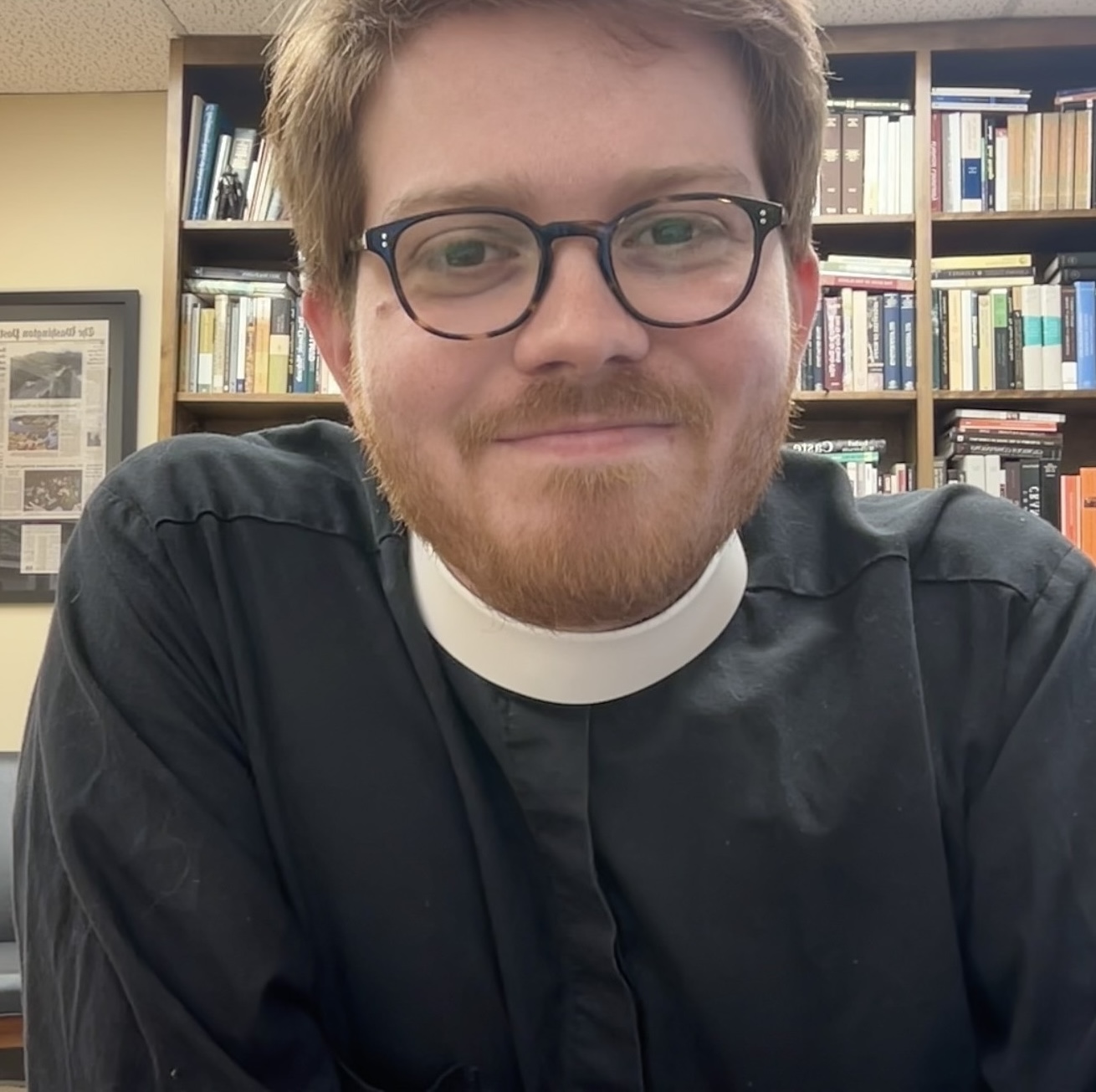
Preached on Sunday, June 28, 2026, the Fifth Sunday after Pentecost, at Trinity Episcopal Cathedral, Little Rock.
[God] said to Abraham, “Take your son, your only son Isaac, whom you love, and go to the land of Moriah, and offer him there as a burnt offering.” (Genesis 22:2)
That was not the plan.
When God first called Abraham, He promised to make of him a great nation. He promised descendants as numerous as the stars of heaven and declared that through Abraham all the families of the earth would be blessed. Abraham believed that promise and followed where God led him. Yet from the beginning there was an obvious problem: Abraham and Sarah had no children.
The years that followed were marked by waiting, uncertainty, and more than a few missteps. Abraham and Sarah trusted God’s promise, doubted God’s promise, tried to help God’s promise along, and then returned once again to trusting it. Yet through every turn in the story, God continued to insist that He would do exactly what He had said He would do.
Then Isaac was born.
By the time we arrive at today’s reading, Isaac is more than Abraham’s beloved son. He is the visible sign that God has kept His word. He is the answer to years of prayer and years of waiting. Abraham can finally see how the promise will be fulfilled. The covenant, the descendants, and the blessing promised to all the families of the earth appear to run through this child.
Then God says, “Take your son, your only son Isaac, whom you love.”
That was not the plan.
The scandal of this story is obvious. God commands Abraham to sacrifice his son, and every instinct within us recoils at the thought. We should not rush past the horror of it. We should not pretend that the command sounds reasonable. It does not. The story is meant to disturb us.
And yet, if we stop with our outrage, we miss what the story is trying to reveal.
God is asking Abraham to place upon the altar not only his son, but the promise itself. Isaac is not merely Abraham’s child. Isaac is Abraham’s explanation for how God is going to keep His word. Isaac is the means by which the promise appears likely to be fulfilled. When God asks for Isaac, He asks Abraham to surrender the very thing that seems to make God’s longtime promise possible.
That was not the plan.
The question at the center of the story is, therefore, not whether Abraham loves Isaac. The text makes it abundantly clear that he does. The question is whether Abraham trusts God more than he trusts his own understanding of how God works.
For years, Abraham has assumed that God’s promise and Isaac belong together. He has assumed that God’s future must arrive in this particular way. He has come to trust not only God’s promise, but his own explanation of how that promise will come to pass. God leads him up the mountain in order to separate those two things.
As Christians have wrestled with this story through the centuries, they have often been struck by just how complete Abraham’s loss appears to be—not only a long desired child, but a long expected fulfilment of God’s promise made all those years ago. The nineteenth century philosopher Søren Kierkegaard once put it this way: Abraham “believed by virtue of the absurd; for all human calculation had long since ceased” [1]. By that, he meant that Abraham trusted God even when the situation before him appeared to make God’s promise impossible. Standing on Mount Moriah, Abraham could not see how God would keep His word. He could only trust that somehow He would.
And that is what makes Abraham the father of faith. Faith is not believing that God can do the predictable thing. Faith is trusting that God remains faithful even when we can no longer imagine how His faithfulness will be revealed.
The knife raised over Isaac is also raised over Abraham’s certainty. It is raised over Abraham’s plans. It is raised over Abraham’s conviction that he knows exactly how God must accomplish what God has promised. There on Mount Moriah, Abraham learns what every disciple must eventually learn: God is faithful to His promises, but He refuses to be confined by our expectations.
The same lesson confronts us still. All of us have plans for our lives, hopes for our families, ambitions for our work, and visions of what faithfulness ought to look like. Many of those things are good. Some of them may even be gifts from God, like Isaac. Yet it’s remarkably easy to confuse God’s promise with the particular means we think God needs to fulfill it.
Sooner or later, we all find ourselves asking Abraham’s question. Can God still be trusted when the path forward disappears? Can God still be trusted when the future no longer looks the way we expected? Can God still be trusted when the very thing we thought was necessary is sacrificed at our own hand? Genesis answers those questions with a resounding “yes.”
At the climax of the story, Abraham looks up and sees a ram caught in a thicket. The sacrifice is provided. Isaac walks down the mountain beside his father. The promise remains intact. And Abraham gives that place a name: “The LORD will provide.”
He does not give it that name because every question has been answered. He gives it that name because he has come to recognize what had been true all along. The promise never depended upon Abraham’s ingenuity. The promise never depended upon Abraham’s ability to see the future or understand what God was doing. The promise never even really depended upon Isaac. The promise depended upon God.
That was true when Abraham first heard the call to leave his homeland. It was true when he looked up at the stars and heard God’s promise. It was true when Isaac was finally born. It was true on the long road to Moriah. It remained true on the way down the mountain. And it remains true for you and for me. When it comes to the promise, the LORD will provide—not Abraham, and not Isaac, and not you, and not me, but God Himself.
When Abraham names the place as he does, he leaves behind a testimony for all of us who would come after him. He leaves behind a confession of faith born not out of certainty, but out of trust: “The LORD will provide.”
For you see, that was always the plan. Amen.
[1] Søren Kierkegaard, Fear and Trembling, translated by Alastair Hannay (London: Penguin Classics, 1985), page 65.


Leave a Reply