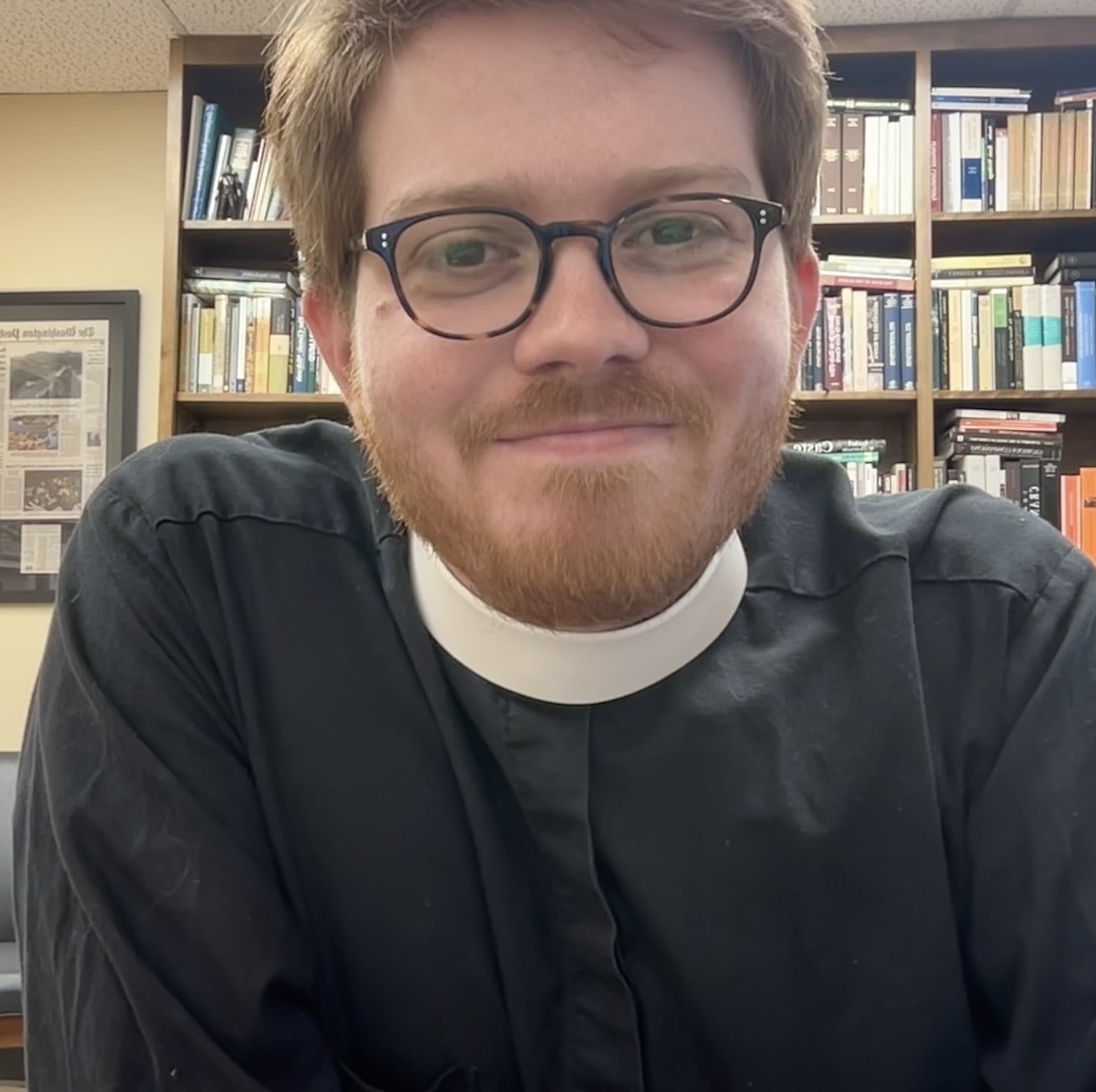
Preached on Sunday, October 25, 2026, the Twenty-Second Sunday after Pentecost, at Trinity Episcopal Cathedral in Little Rock.
Jesus said, “You shall love the Lord your God with all your heart, and with all your soul, and with all your mind.’ This is the greatest and first commandment. And a second is like it: ‘You shall love your neighbor as yourself.’ On these two commandments hang all the law and the prophets.” (Matthew 22:37–39)
Those of you who regularly attend our eight o’clock service on Sunday mornings, or our Wednesday evening healing Eucharist, will recognize something familiar in today’s Gospel. Near the beginning of the traditional rite of the Book of Common Prayer, we hear what the Prayer Book calls the Summary of the Law: “Hear what our Lord Jesus Christ saith: Thou shalt love the Lord thy God with all thy heart, and with all thy soul, and with all thy mind. This is the first and great commandment. And the second is like unto it: Thou shalt love thy neighbor as thyself. On these two commandments hang all the Law and the Prophets.”
There is something wonderful about the fact that the Summary stands so near the beginning of our worship, because there is something enormously helpful about having a summary. When something is large or complicated, a good summary helps us hold on. And the Law certainly qualifies as something large and complicated. The commandments of Scripture touch everything from worship and family life to justice, property, money, and our obligations to strangers. We might imagine the Law as an enormous mansion, filled with rooms and corridors, many of which we have hardly begun to explore. The Summary of the Law doesn’t pretend the mansion is small. It gives us a key to that mansion, a key we can carry in our pocket.
Back in the fifth century, Saint Augustine encouraged his congregation to memorize Scripture, something that may be becoming a lost art for us. Memorizing Scripture, said Augustine, is like carrying the Bible around in your pocket. You don’t need a Bible nearby, because the words are already with you. Consider knowing the twenty-third Psalm by heart. When grief or fear comes, you can summon its words: “Yea, though I walk through the valley of the shadow of death, I will fear no evil.” What a gift to have those words so readily available when you need them. And that’s exactly what Jesus gives us in today’s Gospel.
A lawyer asks which commandment in the Law is greatest, and Jesus answers with two: love God with all your heart, soul, and mind, and love your neighbor as yourself. Then he adds: “On these two commandments hang all the Law and the Prophets.” He isn’t doing away with the rest of Scripture. He is telling us what holds it all together. The Summary doesn’t replace the Law; it makes the Law something we can take with us into the world.
Let’s consider some examples:
We find ourselves at work, dealing with a coworker who has frustrated us again. We could respond with a sharp word, or take satisfaction in their embarrassment. But then, we remember what we have in our pocket: love God, and love your neighbor. That doesn’t settle every question, but it gives us a place to begin: what does love require here?
We find ourselves on the highway, already late, behind a driver who seems determined to make us later still. Our patience disappears, and the person ahead becomes little more than an obstacle for me and my Subaru. But then we remember what we have in our pocket: love God, and love your neighbor. Then, the person ahead of us is a person, too, with their own burdens and destinations.
We find ourselves standing before a ballot, weighing our responsibilities to our community and the people affected by our choices. And then, we remember what we have in our pocket: love God, and love your neighbor.
Or we find ourselves at the store, deciding what to buy; or at home, deciding how much time we can spare for someone who needs us. And again, we remember what we have in our pocket: love God, and love your neighbor. The Summary comes with us everywhere.
Such is God’s extraordinary love in giving us the Law. God’s commandments aren’t hidden away, reserved for scholars and saints. Their great purpose is given to us in words even a child can learn. We can put them in our pockets when we leave Church and carry them into situations that will demand our very best. There is always more to learn about obedience. But we never have to wonder where to begin.
“Love God with everything you’ve got, and love your neighbor as yourself. On these two commandments hangs everything else.” This doesn’t make God’s demands smaller, but makes them near enough to carry. We can learn these words by heart, take them with us where we go, and bring them out when we need them. And that? That’s something we can work with. Amen.


Leave a Reply